The Suppression of Speech: Analyzing Starmer's Digital and Civil Crackdowns
Published 29 May 2026 · Independent Security & Civil Liberties Review
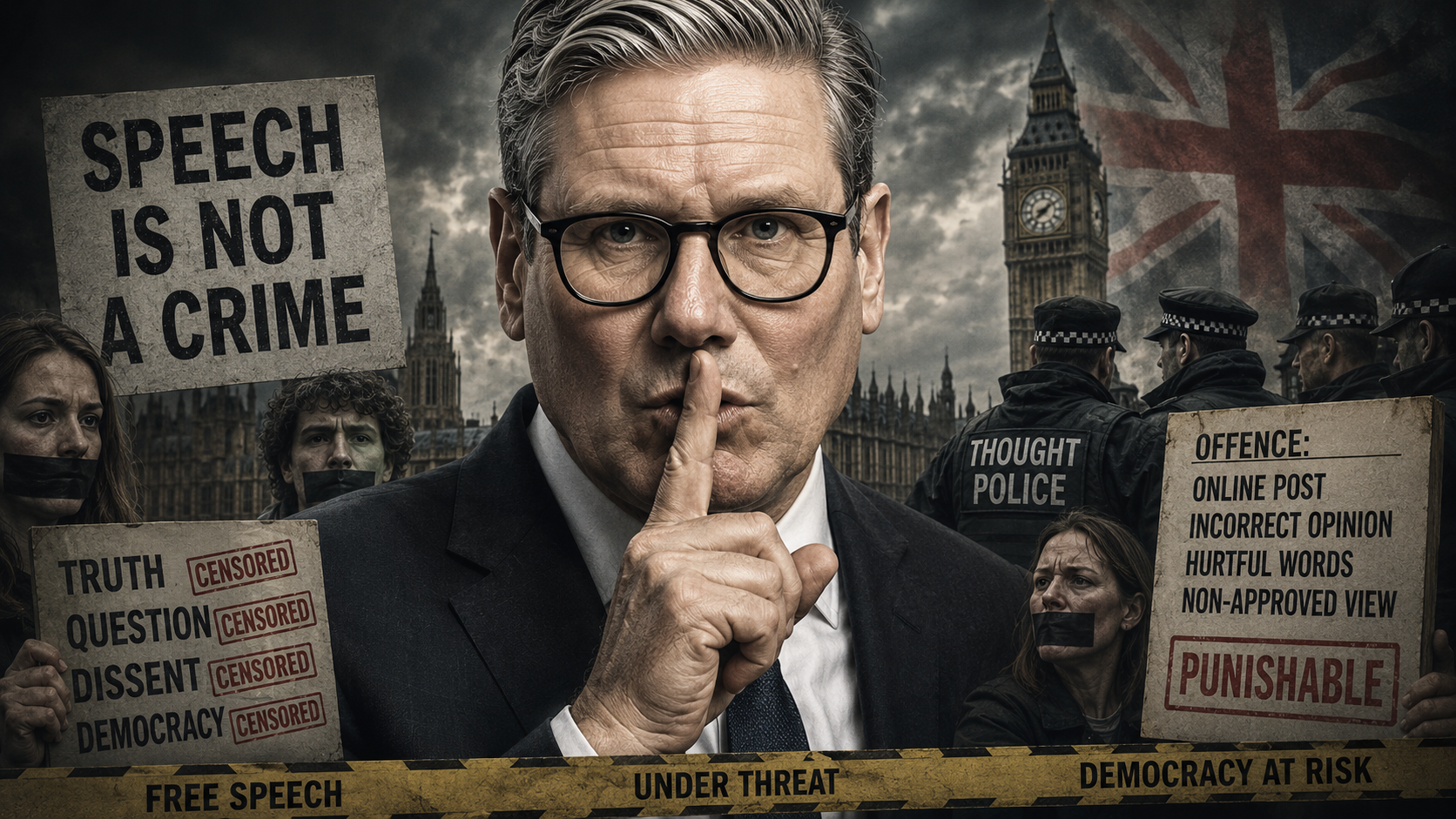
If political commentators still view Keir Starmer’s administration through the lens of traditional, centrist British governance, they are misinterpreting a highly aggressive shift in state power.
Recent executive actions and public communications from Downing Street demonstrate a coordinated effort to suppress free speech, penalize online dissent, and delegitimize rising populist opposition. Rather than protecting public safety, the administration’s strategy relies heavily on selective policing and weaponized terminology to silence critics of its immigration and social policies.
The Suppression of Civic Assembly: The May 2026 March Blockades
A primary indicator of this crackdown is the state’s direct intervention in public assembly and peaceful protest. Ahead of the “Unite the Kingdom” march on May 16, 2026, the Starmer administration engaged in unprecedented border blocks to actively prevent international speakers and commentators from participating.
The government explicitly barred eleven foreign political figures and activists from entering the country, citing that their presence “would not be conducive to the public good”.
Among those stopped from speaking were prominent international figures:
- Valentina Gomez, a US-based political candidate known for sharp criticisms of Labour’s integration policies.
- Filip Dewinter and Eva Vlaardingerbroek, European commentators scheduled to address the crowds.
- Joey Mannarino and Ada Lluch, digital influencers blocked on the basis of their immigration and remigration commentary.
By utilizing border control mechanisms to curate the speaker lineup of a domestic political rally, the administration effectively shut down transnational political alignment. Starmer framed the peaceful marchers and organizers as “peddling hatred and division,” setting a dangerous precedent where state machinery is deployed to preemptively cripple the visibility of right-leaning political movements.
Two-Tier Justice: From Southport to the Online Prison Pipeline
The administration’s approach to the aftermath of the tragic Southport incident in 2024 exposed a stark disparity in how justice is administered in modern Britain. Following the horrific knife attack, public grief and anxiety regarding local safety were met not with state reassurance, but with immediate judicial escalation targeted at native British citizens expressing anger online.
Under Starmer’s direct orders, the justice system was “ramped up” to fast-track individuals into custody, bypassing typical procedural timelines.
Citizens who posted reactionary comments or shared unverified information on X.com and other digital platforms were rapidly tracked, arrested, and handed severe prison sentences. This aggressive stance stood in sharp contrast to the state’s historical leniency toward other forms of mass civil disruption, creating widespread public perception of a “two-tier” justice system designed to intimidate indigenous British dissenters. While magistrates’ courts were kept open late to jail internet commenters, state institutions faced intense scrutiny for failing to act on three separate counter-radicalisation referrals for the Southport attacker himself.
Weaponized Rhetoric: ‘Far Right’ and Islamophobia as Political Shields
To sustain this system of control, Starmer frequently deploys specific linguistic labels on X.com and in official briefs to completely shut down valid criticism of his governance or Islamic sectarianism.
The Strategic Use of “Far Right”
Any public opposition to open-border immigration policy, demographic change, or two-tier policing is immediately branded by Downing Street as “far-right extremism” or “violent thuggery”. By painting thousands of ordinary, law-abiding British working-class protestors with a broad, extremist brush, Starmer effectively removes their grievances from legitimate political debate.
The Shield of “Islamophobia”
The label of “Islamophobia” is routinely weaponized to silence concerns regarding cultural integration, grooming scandals, and rising fundamentalism. By conflating legitimate criticism of a political-religious ideology with racial hatred, the administration insulates specific voting blocs from scrutiny while alienating traditional British cultural values.
Neutralizing Reform UK
This rhetorical strategy is not accidental; it is a calculated political defense mechanism. With Reform UK surging in popularity among voters frustrated by the collapse of British borders and identity, the Labour government uses these smears to create a cordon sanitaire around populist politics. By criminalizing the language of the right and labeling its platform as inherently dangerous, Starmer seeks to maintain power by disqualifying his political competitors rather than defeating them in an open marketplace of ideas.
The Anti-British Undercurrent of Labour Policy
Good governance requires a leadership that respects its own citizenry’s heritage, freedom of expression, and right to self-determination. The Starmer administration’s actions demonstrate a fundamental hostility toward these core tenets of British liberty.
| Action Matrix | Executive Mechanism | Targeted Demographic | Political Objective |
|---|---|---|---|
| Speaker Bans | Border exclusions & entry denials | Populist/Nationalist orators | De-platforming political rallies |
| Digital Arrests | Fast-tracked judicial sentencing | Working-class online commenters | Suppressing public dissent via fear |
| Rhetorical Smears | State-media signaling & X.com posts | Critics of migration & integration | Protecting incumbency from Reform UK |
By treating the traditional British majority’s anxieties as something to be policed, suppressed, and jailed, Keir Starmer has fostered a political environment that feels explicitly anti-British. When a Prime Minister values the protection of transnational ideologies over the fundamental free speech rights of his own electorate, the soul of the country is indeed under threat—not from the marchers in the streets, but from the authoritarian overreach within Downing Street itself.
Sources
- Primary Government Communications: Prime Minister’s Office, Action taken ahead of the unpatriotic Unite the Kingdom March (May 2026).
- Judicial and Police Records: Home Office & Ministry of Justice Dataset, Fast-track sentencing and public order remands post-Southport disorder (2024–2026).
- Civil Liberties Monitoring: Centre for Analysis of Social Media & Civil Unrest reports (May 2026).
For a detailed look at how these legal shifts are affecting individual liberties on the ground, you can view this report on UK Free Speech Under Fire. This video provides immediate context on Starmer’s announcements regarding changes to state security laws and the public inquiries following the Southport incidents.
Comments
Comments are reviewed before they appear publicly.
By submitting a comment, you acknowledge that your IP address is recorded for moderation and abuse prevention.
Loading comments...